
 Locations





Fab-Form Industries Ltd., a Delta, B.C.-based designer and manufacturer of concrete forming products, plans to test technologies to enable homes to be built faster, cheaper and more sustainably at a site in nearby White Rock.
In doing so, the company will also be moving toward a shift in some of its traditional product lines.
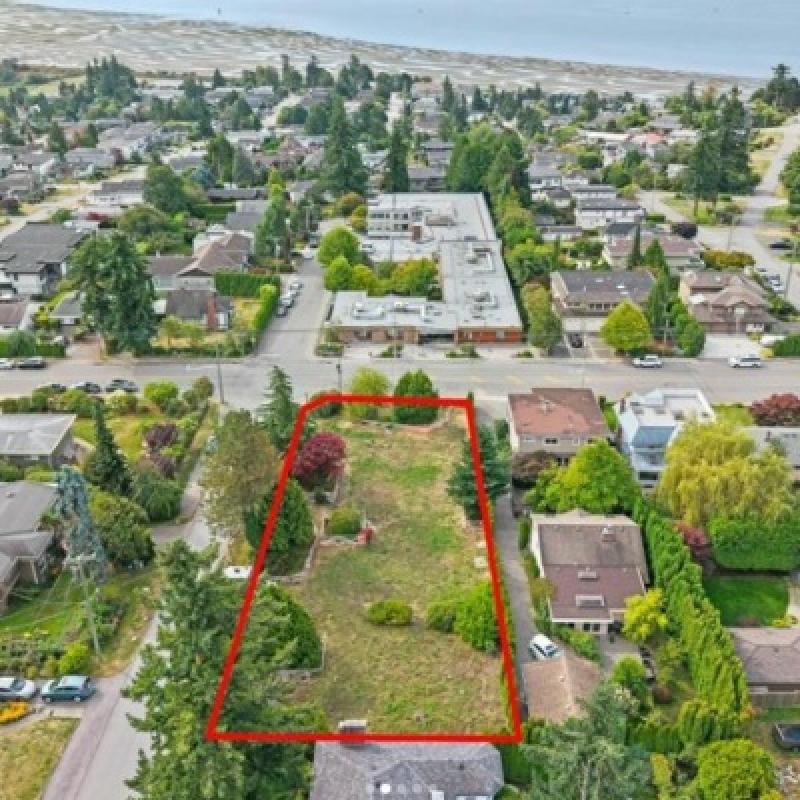
The testing will take place on a 0.41-acre lot in a residential area purchased by the company in January. The plan, as laid out by Fab-Form CEO Joey Fearn, is to build four single-family homes.
“They would be kind of a paradigm shift for the construction industry, getting away from heavily embodied carbon products like concrete,” he said in an interview with RENX Homes. “Our big goal here is to make it affordable.”
It is also somewhat a return to its roots. Fab-Form (FBF-X) was founded in 1986 as a homebuilder. Its founder transitioned to making concrete forming products after he saw thousands of dollars wasted on a construction project because of a measuring error for footing lumber.
Fab-Form now sells its products to homebuilders in Canada and the U.S.
The company’s first product was Fastfoot, a forming product made out of fabric. Now, it is developing additional product lines to "greatly reduce the amount of concrete" needed for some aspects of homebuilding.
Demonstrating the innovations
The four planned single-family homes in White Rock will range up to 2,400 square feet, designed as dwellings for Fab-Form employees to purchase and live in, Fearn said.
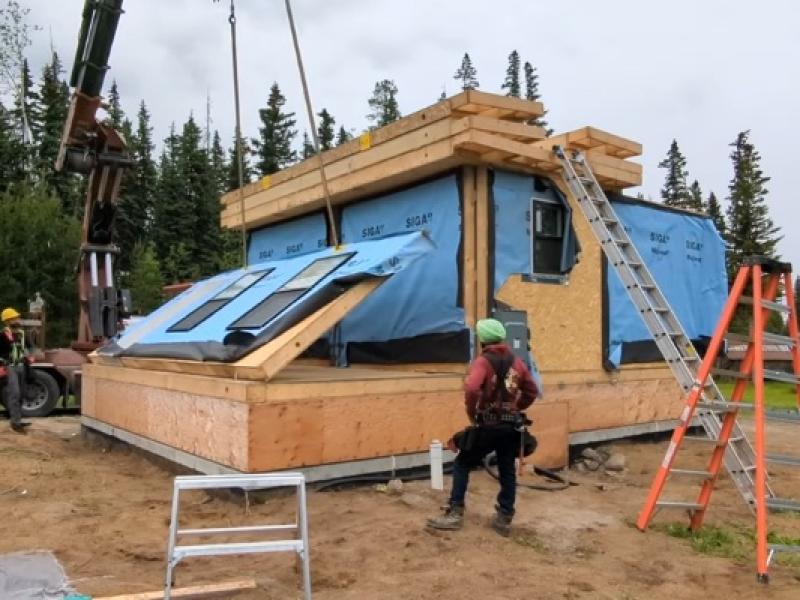
Fab-Form’s goals are to shrink the construction time for a single-family home to approximately six weeks, consume approximately 60 per cent less energy than a typical home, and be less expensive to build.
The products the company plans to test include Flex-R, a flexible under-slab insulation and vapour barrier system. It can halve the labour and time required to install under-slab insulation compared to traditional means, Fearn said.
Other technologies planned for testing include a product that would greatly reduce the amount of concrete needed to form a foundation, insulated concrete forms and a foundation system.
Reducing the amount of concrete to build a foundation would address embodied carbon emissions, a possibility Fearn admitted would "cannibalize some of our existing product lines." The insulated concrete forms could significantly reduce a home’s heating and electrical bills, Fearn said, while the foundation system could reduce relevant costs by approximately $50,000 over a traditionally formed basement.
There are plans to test more innovations, he said, but Fearn said at this point he can't disclose details about those products.
Lowering costs a key goal
Getting the cost of housing to a price young families can afford is central to the project, he explained. Housing in Greater Vancouver is among the most expensive in Canada and the world, putting home ownership out of reach for many locals.
With millions of additional units needed to bring Canada's housing to more affordable levels, it would demand significantly more construction, materials and energy, while also adding to the country's carbon emissions.
In light of such challenges in Canada’s metro areas, governments and the private sector have taken steps to push innovations just like Fab-Form. Those include factory-built homes, prefabrication and panelized construction to shorten construction schedules, cut costs and reduce waste and carbon emissions.
Despite a push to build more multifamily housing to increase supply, Fearn said Fab-Form opted to build single-family homes because there is more market demand for these home types.
Fab-Form hopes to start its testing process in September. The company plans to partner with materials suppliers and trades on the project.
Sharable knowledge
To benefit the Canadian homebuilding industry, Fab-Form wants to share its insights from the project with developers, builders, architects, engineers and homeowners. The company plans to host an open house every Friday so its industry peers can witness the technologies at work.
“This is going to be a showcase for other developers to steal our methods of construction and implement themselves,” Fearn said. “We’re not trying to be taking all this knowledge and information we’re getting for ourselves.”
To publicize its efforts, Fab-Form also plans to have a film crew document the company’s process “from permits to cutting the grass,” he said.
The plan is to release 15-minute videos every week to show “all the headaches and the wins.”


 Industry Events
 Locations